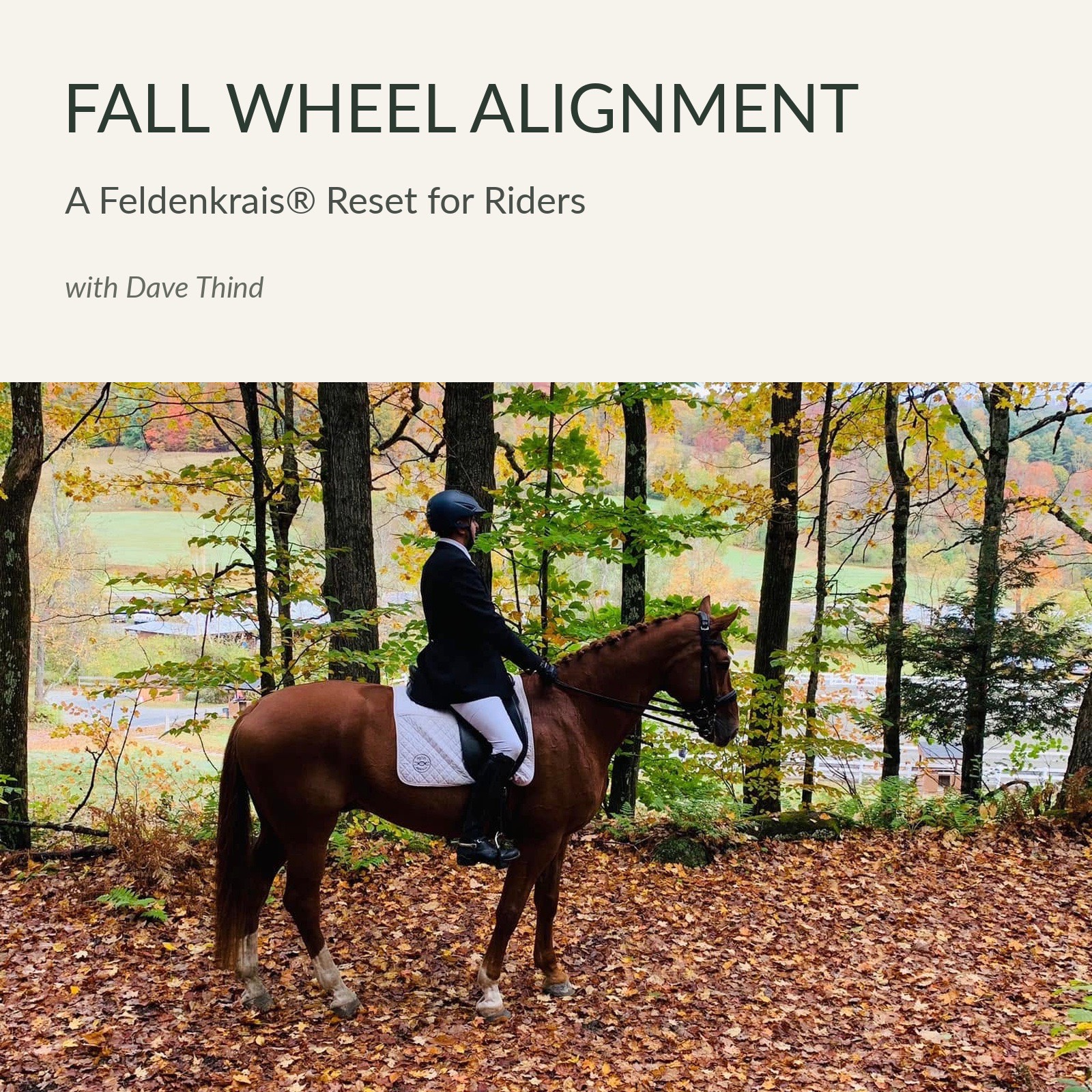
This may be for you if…
• You work hard at your riding but still feel stuck in familiar patterns.
• You carry stiffness, asymmetry, or tension into the saddle.
• You want clearer aids without more force.
• You want to feel more organized for your horse.
Feldenkrais offers a different path: not more strain, but better information for your nervous system.
What’s Included
✓ 6 pre-recorded lessons for riders
✓ Approximately 45 minutes each
✓ Designed to be completed in sequence
✓ At home, on demand, with lifetime access
✓ No Feldenkrais experience is required
Why This Feels Different
This is not about forcing a better position.
It is about helping your nervous system discover easier, more efficient options — so you can feel more organized, more balanced, and more available to your horse.
That is the reset.
Fall Wheel Alignment
A thoughtful next step for the rider who wants greater ease, comfort, and clarity.
Special offer: $299.99
Regularly $379 · Ends Sunday, November 8, 2026 at 11:59 p.m. EST.
Six recorded lessons, approximately 45 minutes each, in a carefully designed sequence. Lifetime access.
Explore easier movement and clearer communication with your horse—without forcing a better position.
“I am finding softness more quickly … we can move together in harmony.”
— Lisa Holtz, AA
A different way to ride. A shared way to learn.
Fall Wheel Alignment is a starting point for riders who value curiosity, thoughtful progress, and a more refined partnership with the horse.
Discover what changes for you. Keep exploring. And if this approach speaks to you, share that discovery with another rider.
Six lessons · Lifetime access · $299.99 through Sunday, November 8, 11:59 p.m. EST.
Begin Fall Wheel Alignment


What You’ll Explore in These Lessons
A six-part progression designed to help you feel more organized, more balanced, and more available in the saddle.

Lesson 1
Begin from the ground up, bringing new awareness to your feet and the support they offer your whole system.

Lesson 2
Clarify the functional movements of your legs and hips for smoother, quieter, more effective aids.

Lesson 3
Return to developmental patterns that help you find upright posture, spinal ease, and effortless organization.

Lesson 4
Work with seat bones, shoulders, ribs, and spine to refine symmetry, self-carriage, and balance.

Lesson 5
Refine feel, even contact, and turning aids while continuing to improve coordination throughout the system.
Helpful props:
Mat or carpet space
Support for your head
A flat stool
A long mirror

Lesson 6
Bring everything together for a beautiful and wonderful feeling final product.
You've done the lessons, it is now in your body...
Come back to lesson 6 for a quick reset!!
With easy-to-repeat tools, you can easily return to feeling like "walking on clouds", perhaps before a lesson, clinic, or show.
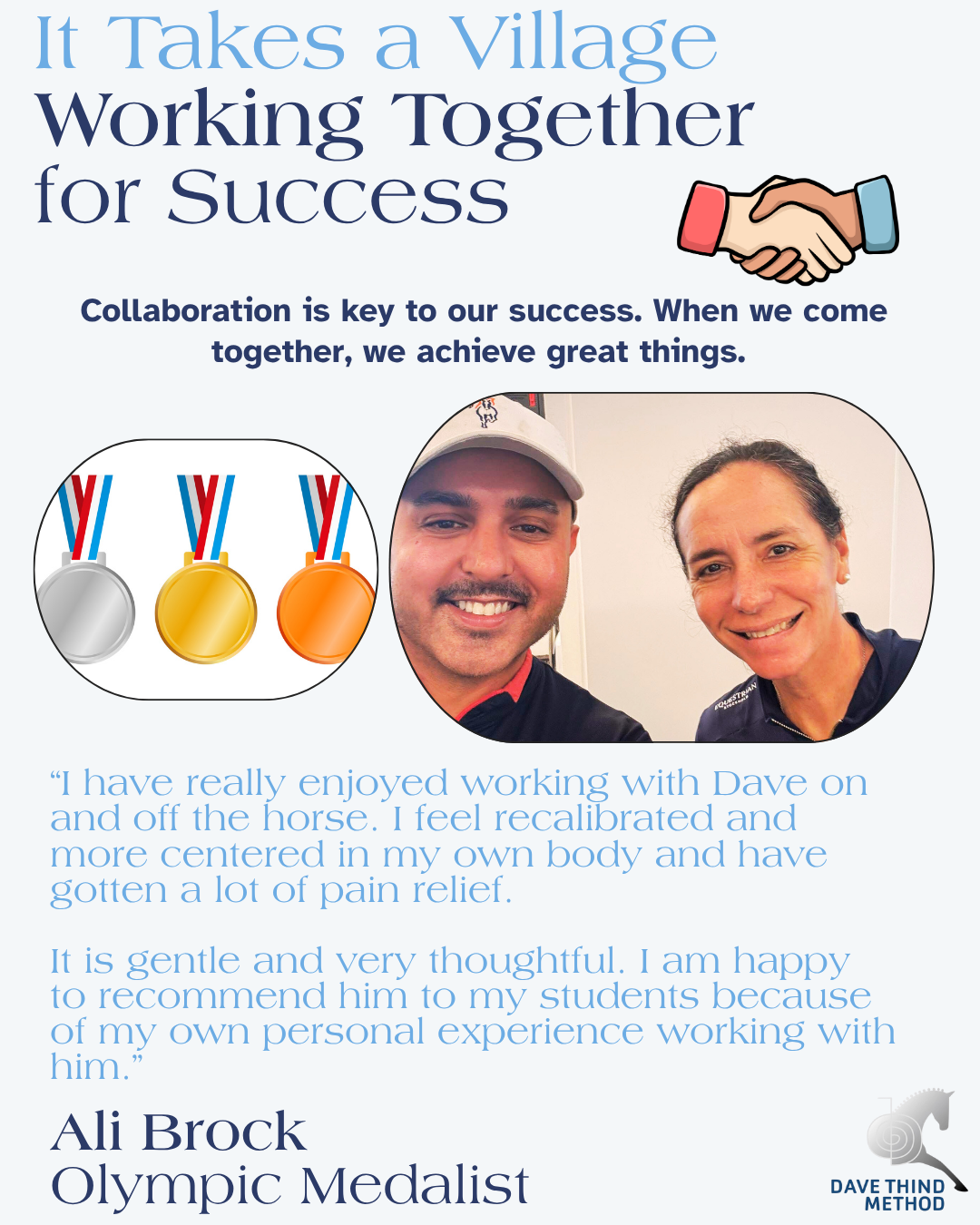
When You Change, Your Riding Changes
Riders often describe this work as recalibrating, centering, and quietly transformative.
It can influence comfort, coordination, symmetry, and the quality of communication with the horse.
This is not only about the rider.
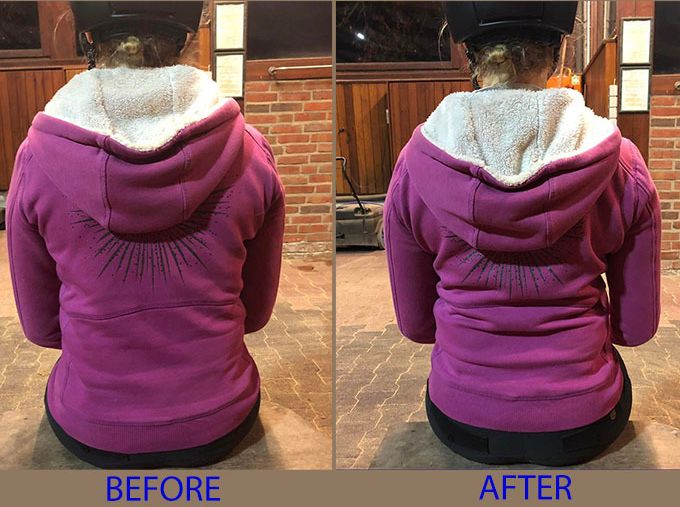
A rider who moves with less bracing, less unnecessary effort, and more adaptability changes what the horse feels underneath them.
What if greater harmony began with greater ease?

Meet Dave Thind
Dave is a Grand Prix dressage rider, German FN Trainer A (Level III), and Guild Certified Feldenkrais Practitioner. He brings together an understanding of riding and movement learning to help riders discover greater ease, clearer coordination, and more harmony with their horses.
He works with riders because he understands both the demands of riding and the value of thoughtful, well-guided change.
This course is designed to bring that same careful teaching into an at-home format.
The aim is not to lecture you or push you harder. It is to help you notice more, organize more intelligently, and ride with greater harmony.


Why Feldenkrais Is Different
The nervous system can learn. It can reorganize. And with the right information, a better solution can appear without forcing it.
Simply telling yourself to sit straighter, relax your hip, or stop gripping often does not create lasting change.
Feldenkrais works differently. Through carefully guided movement, attention, and variation, it helps you discover new options rather than imposing them.
You are not trying to force your body into a new shape.
You are creating the conditions for easier, more intelligent organization — the kind that can translate into greater symmetry, suppleness, comfort, and feel for your horse.
Get Started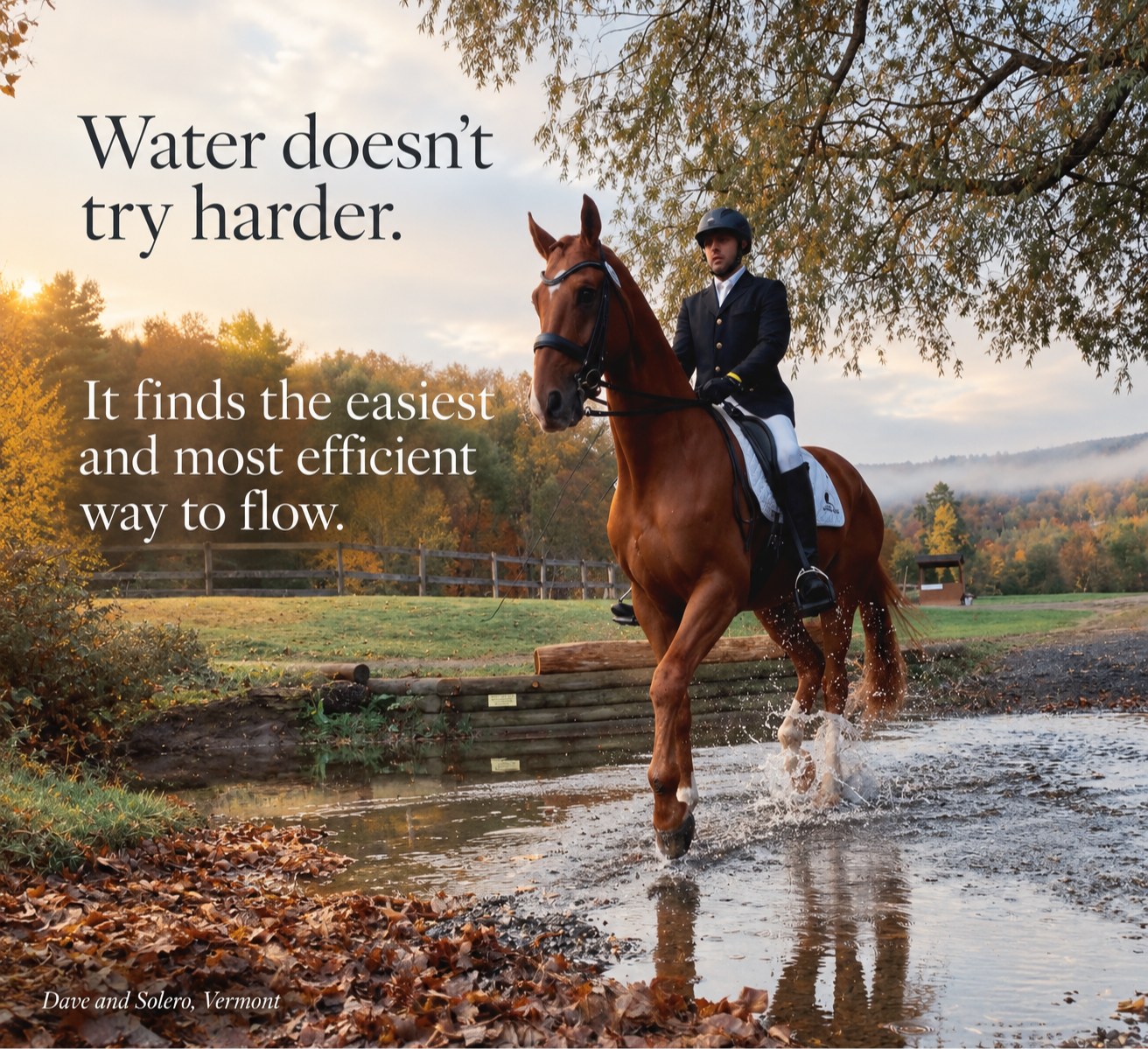
What If Easier Is Actually Better?
Sometimes what feels difficult does not require more strength or more trying.
Sometimes there is simply too much happening.
Too much gripping.
Too much bracing.
Too much unnecessary effort.
What becomes possible when your nervous system learns what it no longer needs to do?
Not less involvement. Not collapsing. But using the right amount of effort, in the right place, at the right time.

Dr. Hollis Day, (M.D).,
“You have to experience it to believe it. I have first-hand, witnessed and experienced powerful, undeniable and almost unbelievable improvement in both posture and motor function using the Dave Thind Method,” attested Dr. Hollis Day. Dr. Day, who is head of Geriatrics at Boston Medical, is a lifelong hunter/jumper competitor that now trains and competes in dressage. “Dave’s highly advanced knowledge of anatomy, biomechanics and how humans learn is something every rider can benefit from,” she added.

Dr. Hilary Clayton (DVM)
“Dave’s classes are interesting, informative and FUN. Each class brings a new level of self-awareness in the saddle and provides us with tools to ride better – what’s not to like about that!,” proclaimed Dr. Hilary Clayton upon reflecting with her own personal experience.
She also said “ I love the DTM focus on the pelvis which research shows is the key to riding success. His lessons will help all of us to reach our full potential in the saddle.”
Christoph Hess on Horse Welfare Using DTM
German Master Christoph Hess, retired from his long-held position as Head of Education and Training at the German Equestrian Federation F.N., says of training horses:
“The most important part of the training of a horse is the training of the rider's position. No rider is able to train a horse properly when they have not trained their seat.”
Balanced, relaxed, and honest riding is difficult — which is exactly why this work matters.
“Dave is an expert on schooling riders. He is brilliant in teaching the correct rider’s position in a friendly and positive way... Dave’s training will make you happy and especially your horses happy.”
“The better the rider’s position the happier the horse.”
— Christoph Hess, F.N. Educational Ambassador

Dr. Lauren Dembkoski Adelizi - Doctor of Chiropractic Medicine and Grand Prix dressage rider
“I often recommend this work to patients in my chiropractic practice as a tool to understand where your body is in space and to make cognitive corrections to change how your body moves in space.
Dave is a pioneer in marrying a technique that teaches body awareness to riders.
He is on the cusp of a huge movement that is going to sweep the dressage world, as we better understand how our physical body can be changed through cognitive methods. He has furthered my understanding of the changes that I can make in my body to be a better rider. I strongly recommend that you investigate the Dave Thind Method.”

Stephanie Roy Osteopath D.O.
“With Dave, you will experience an incredible feeling of liberation when acute problems that other trainers have either ignored or have simply been unable to fix are dealt with once and for all.
Even problems that you have been trying to fix for years are quickly remedied, with minimal effort! And like magic, your horse who you thought was naturally heavy on the forehand, crooked, laterally stiff or even slightly off, suddenly becomes light, supple, straight and happy.
Cause and effect; Dave has simply become an expert. You will marvel at how big problems have small and easy solutions.”

Got Questions?
Is this an exercise program?
Do I need to be in pain or feel stiff to benefit?
How do I take the lessons?
Do I need previous Feldenkrais experience?
What Is Feldenkrais?
Feldenkrais is a gentle, awareness-based approach to movement that helps you notice how you organize yourself and discover easier options.
Rather than forcing better posture or trying harder, this work helps improve ease, coordination, balance, and nervous system regulation through guided attention and small, thoughtful movements.
For riders, that can mean feeling more organized, more comfortable, and more available to communicate clearly with the horse.